CommonSense Audio
Audio Nirvana, Lowther, High Efficiency DIY Full Range Speakers
Audio Nirvana EL84 Vacuum Tube Stereo Amplifiers
Audio Nirvana 'Sub 8' Subwoofers For Music
World's Best Sound.....or your money back.....


Audio Nirvana 'SUPER' Series
FREE SHIPPING IN THE USA
(Discount shipping overseas)
100% MONEY BACK GUARANTEE
| Super 8 | ||||
| $325/pr |
| Super 12 |
| $495/pr |
| Super 15 |
| $795/pr |
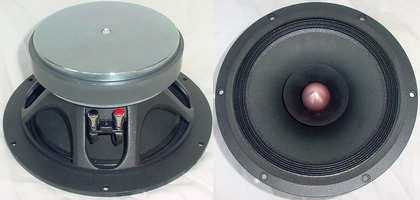
Audio Nirvana Super 8
$325/pair w/free shipping in the US
The Audio Nirvana Super 8 is a single driver full range speaker that weighs almost 9 lbs. It's the best sounding 8 inch full range speaker you can buy--or your money back. Compare it with the cheap sheet metal frames, small magnets, cheap surrounds, hollow phase plugs, and 'tab' wire connectors of similarly priced full range from any other company. It does it all. No tweeter, midrange, or crossover is required. Audio Nirvana speakers are more detailed, richer, and smoother sounding than any other company's speaker. Price is for a pair (2 speakers). Cabinets are not included. We offer free cabinet plans, parts list, and setup tips with any purchase. We can also refer you to qualified cabinet makers. We are over 30,000 pairs of Audio Nirvanas sold, in the last 23 years, with 100% money back guarantee. We have received only 15 pairs back.
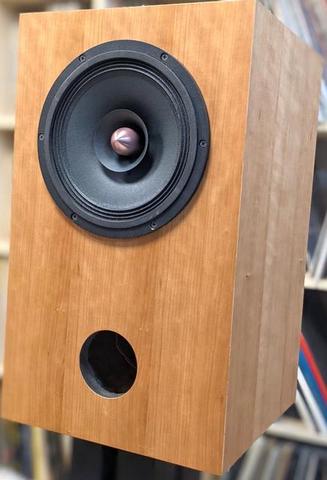


Audio Nirvana Super 12
$495/pair w/free shipping in the US
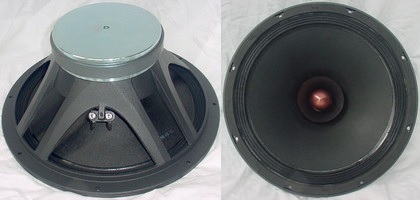
Audio Nirvana Super 15
$795/pair w/free shipping in the US
The Audio Nirvana Super 15 is a single driver full range speaker, and the world's most detailed and best sounding speaker--at ANY price. Second place isn't even close. It does it all. No tweeter, midrange, or crossover is required. The Audio Nirvana Super 15 is much more detailed and natural sounding than any other speaker. Price is for a pair (2 speakers). Cabinets are not included. We offer free cabinet plans, parts list, and setup tips with any purchase. We can also refer you to qualified cabinet makers. We are over 30,000 pairs of Audio Nirvanas sold, in the last 22 years, with 100% money back guarantee. We have received only 15 pairs back.

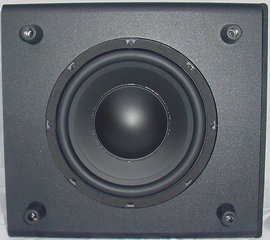
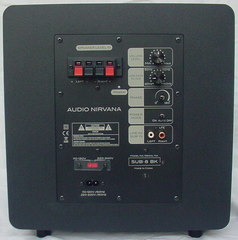
What's the most 'musical' subwoofer you can buy?
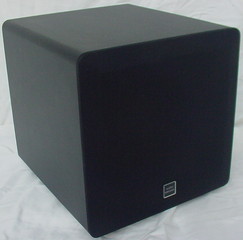
Audio Nirvana Sub 8
$499 w/free shipping in the US

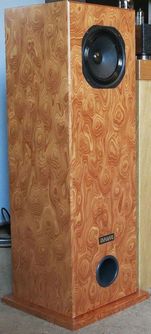
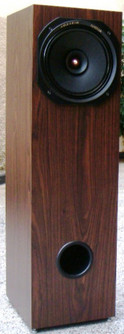
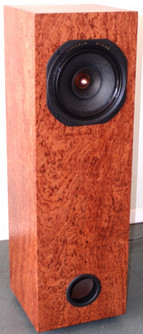
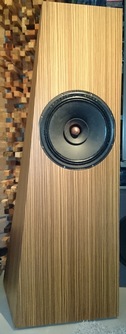
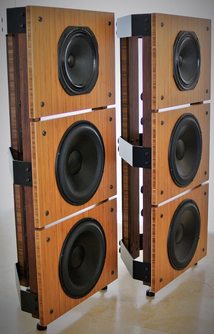
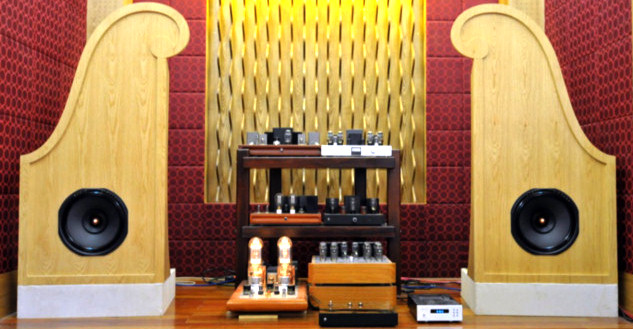


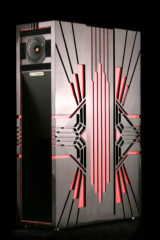
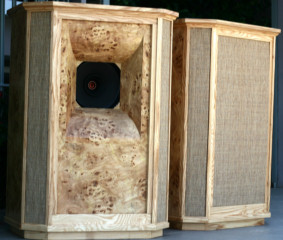
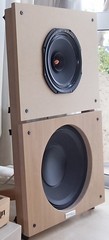
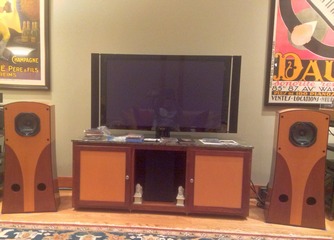
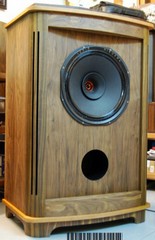
Welcome!
Are you tired of all the hype from advertising driven
websites, magazines, and dealers just out for your money?
Tired of '4D' speakers? Dead, dull, dark, and distant. Ready to be amazed?
Ready to buy from a company that's had only 15 returns out of 30,000+ products sold--even with
100% money back guarantee?
At CommonSense Audio our goal is not to sell
'affordable' speakers and amplifiers, but to make the world's best sound
affordable.
High efficiency DIY full-range speaker kits suitable for bass reflex, open baffle,
bass horn, and transmission line cabinets. From
$325/pair with free shipping.
DIY (Do it yourself) speaker kits with free plans, parts list, and setup tips. Or buy finished cabinets from our recommended cabinetmakers.
Lowther PM6A fullrange speakers--$1700/pair
with free shipping. Or order any other model.
Audio Nirvana EL84 Vacuum Tube Stereo Amplifier--$599
with free shipping. You can't buy a better sounding amplifier.
A quality subwoofer, optimized for music, suitable for use with our high efficiency DIY full
range speakers, or with home theater--$499 with
free shipping.
We sell Audio Nirvana and Lowther high efficiency DIY full range speaker kits.
All Audio Nirvana DIY speakers use beautiful, very strong, cast aluminum frames--not cheap pressed steel sheet metal as most companies use.
We also don't use cheap 'tab' wire connectors, cheap surround materials, hollow phase plugs (which resonate), or small magnets.
We don't build larger full range speakers for more bass, but for astonishing midrange and treble.
We supply free DIY speaker cabinet plans, parts list, and setup tips with any purchase. You can also buy generic cabinets online, or have cabinets made by our woodworking partners.
Audio Nirvana high efficiency DIY full range speakers have better sound than any other speaker and better build quality than any other speaker. But they are priced 40 to 85% LOWER than any similar design because they're built in our own factory.
We have been designing, building, and selling high efficiency DIY full range speakers--using full range drivers--for more than 25 years now. Before we started Audio Nirvana, we were one of the largest sellers of Lowther and Fostex full range speakers. We continue to be dealers for Lowther. With Audio Nirvana we are now one of the largest manufacturers of these types of speakers anywhere in the world.
23 years ago, after many years of using other company's products, we decided to build our own range of high efficiency DIY full range speakers--Audio Nirvana. There were problems with all the other full range speaker designs available and we decided we could do better. We have. And, for the first time, it's possible for you to buy directly from a manufacturer. In this way, you get the most value for your money AND the best sound possible.
A lot of work goes into making a true high efficiency full range speaker, one that approaches 20,000 hz in the treble. And it's expensive. It is necessary to fit powerful magnets to obtain these high frequencies. Our Audio Nirvana full range speakers use magnets as strong--or stronger--than any other full range speaker.
Getting the midrange 'right' is especially difficult. It takes extensive testing to optimize the many design elements. In the end, Audio Nirvanas are the most detailed speakers that money can buy.
Getting the bass 'right' is also a difficult proposition. What should the cone excursion be? What type of material should be used for the cone, the surround, and the spider? What size of voice coil should be used? What type of wire? We have optimized all of these variables to bring you smooth, full, and very quick and precise bass response.
The result is that our Audio Nirvana full range speakers are better sounding than any other full range speakers available. And you can purchase them for far less money.....
You'll also be surprised to discover that--despite our very low prices--our Audio Nirvana speakers are also MUCH better than the world's best multi-driver speakers.
We've heard most of the world's most highly regarded speakers--Wilson Grand Slamm, JM Labs Grande Utopia, Genesis 1, Dynaudio Evidence, etc. (all over $50,000/pr). None of these speakers sound as natural or musical as our Audio Nirvana full range speaker designs. It sounds impossible, but it's true. You are welcome to bring any speaker by for a direct A-B comparison. We've made these comparisons hundreds of times and that's why we can make this claim. And it's not just our opinion. See what our customers have to say on the 300+ Reviews page.
Our goal is not to sell 'affordable' high efficiency DIY full range speakers, but to make the world's best sounding speakers affordable.
Despite selling more than 30,000 pairs of Audio Nirvana full range speakers--with 100% money back guarantee--in 23 years, we've had only 15 pairs returned.....
1. There is no separate woofer, no tweeter, no midrange, and no crossover.
2. Frequency Response: 22 hz to 20,000 hz (varies by model).
3. Clarity, detail, coherence, accuracy, and realism are unmatched because the sound comes from a single voice coil.
4. Imaging and soundstage are incredible because the sound comes from a single point in space.
5. Audio Nirvana high efficiency DIY full-range speakers are precision made with very light paper cones and incredibly strong magnets for precise control.
6. Audio Nirvana high efficiency DIY full-range speakers are very efficient--at least 97 dB in cabinets.
Which Audio Nirvana DIY Full-Range Speaker Should You Choose?
We have a policy, at CommonSense Audio, that we won't sell a more expensive speaker, unless it sounds better. If you pay more, you will get better sound. Choose your cabinet first and that will help you decide which of our three full range drivers to choose. For small bookshelf speakers or small towers, the 8 would be the obvious choice. Our Super 12 will maximize the potential of mid size cabinets. And our 15 is simply the best sounding speaker in the world in the larger cabinets.
Generally speaking, a well designed larger cabinet is always better than a well designed smaller one. Similarly, a well designed larger full range driver is always better than a well designed smaller one. Why? We can't say for sure, but our guess is that the larger cone can more accurately reproduce vocals and most musical instruments. They are closer in size to the instruments (and human diaphragm) they are trying to reproduce. There is a fullness and richness to larger full range speakers that most smaller ones just can't achieve.
In the past, the main reason to use a smaller full range speaker was because a larger one wouldn't go high enough in the treble. However, our 15 inch full range has extension beyond the limits of human hearing . So, unless your cabinet choice requires a smaller speaker, we recommend purchasing our 15.
We'll be happy to discuss your particular needs. Just call or email us.
Audio Nirvana Cabinets
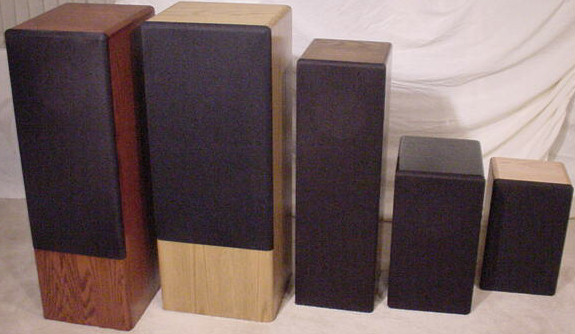
Some of our cabinet designs for the Audio Nirvana full-range DIY speakers.
Left to Right: 2.8 MkII, 2.8 Series 1, 1.3, Minimonitor, and Micromonitor
99.99% of all speaker cabinets ever made are 'bass reflex' designs. We feel that PROPERLY DESIGNED bass reflex speaker cabinets give the best possible sound. Full range speakers are not woofers. The cone has very limited excursion (movement), known as Xmax. Because of this, full range speakers require different sized tuned ports to achieve the best bass. No other company we know can properly tune bass reflex cabinets for full range speakers.
Audio Nirvana full range speakers also work well in bass horn, transmission line, open baffle, and infinite baffle cabinet designs. These require 'short excursion' drivers (speakers) and that's what all Audio Nirvana full range speakers are.
We offer more than 15 different bass reflex and open baffle DIY speaker cabinet designs for Audio Nirvana full range speakers. You will receive a free cabinet plan, parts list, setup tips, and pictures showing proper damping material installation--with any purchase.
Please note that Audio Nirvana DIY full range speakers are only half of your project. The DIY speaker cabinet is the other half. If the cabinet is not right, the overall sound will not be right. Because most Audio Nirvanas are built as kits, some may not have been built correctly. It is very important to us that EVERY Audio Nirvana customer get the best possible sound. If you build our cabinets EXACTLY as designed, you will get great sound. If you bought DIY speaker cabinets, for our full range speakers, or purchased Audio Nirvanas already built by someone else, please check with us that the build was done correctly.
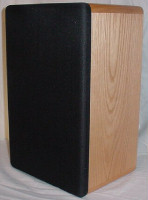 'Micromonitor'
(16T x 10W x 7.25D inches or 406 x 254 x 184 mm)
'Micromonitor'
(16T x 10W x 7.25D inches or 406 x 254 x 184 mm)
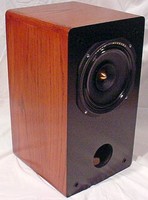 'Minimonitor'
(19T x 10.5W x 11.25D inches or 483 x 267 x 286 mm)
'Minimonitor'
(19T x 10.5W x 11.25D inches or 483 x 267 x 286 mm)
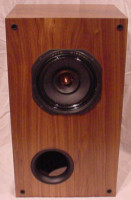 'Monitor' (24T x 13.5W
x 11.25D inches or 610 x 343 x 286 mm)
'Monitor' (24T x 13.5W
x 11.25D inches or 610 x 343 x 286 mm)
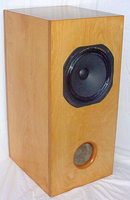 'Monitor MkII' (24T x 11.25W
x 13.5D inches or 610 x 286 x 343 mm)
'Monitor MkII' (24T x 11.25W
x 13.5D inches or 610 x 286 x 343 mm)
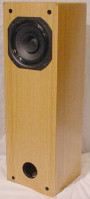 '1.3'
(32T x 10W x 10D inches or 813 x 254 x 254 mm)
'1.3'
(32T x 10W x 10D inches or 813 x 254 x 254 mm)
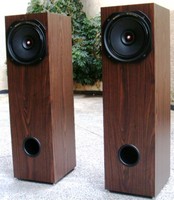 '2.8
Mk II' (38.5T x 12W x 13.75D inches or 978 x 305 x 349 mm)
'2.8
Mk II' (38.5T x 12W x 13.75D inches or 978 x 305 x 349 mm)
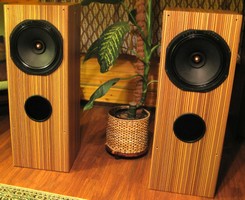 '2.8
Series I' (38.5T x 14.5W x 11.25D inches or 978 x 368 x 286 mm)
'2.8
Series I' (38.5T x 14.5W x 11.25D inches or 978 x 368 x 286 mm)
 '2.8-15' (32T x 18W x 11D inches or 810 x 460 x 280 mm)
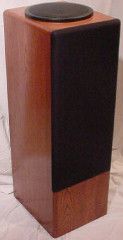 '2.8
Mk II Ambience' (38.5T x 12W x 13.75D inches or 978 x 305 x 349 mm
'2.8
Mk II Ambience' (38.5T x 12W x 13.75D inches or 978 x 305 x 349 mm
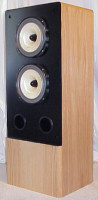 '2.8
Series I Dynamic' (38.5T x 14.5W x 11.25D inches or 978 x 368 x 286 mm)
'2.8
Series I Dynamic' (38.5T x 14.5W x 11.25D inches or 978 x 368 x 286 mm)
--Also Available in narrow MkII style cabinet
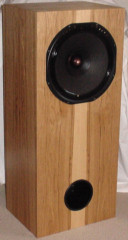 '5.6' (44T x 18.75W
x 14.75D inches or 1118 x 476 x 375 mm)
'5.6' (44T x 18.75W
x 14.75D inches or 1118 x 476 x 375 mm)
--Also available in narrow '5.6 MkII' style cabinet (44T x 14.75W x 18.75D or 1118 x 375 x 476 mm)
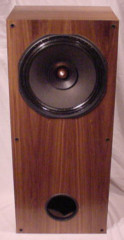 '8.0'
(44T x 18.75W x 20.5D inches or 1118 x 476 x 521 mm)
'8.0'
(44T x 18.75W x 20.5D inches or 1118 x 476 x 521 mm)
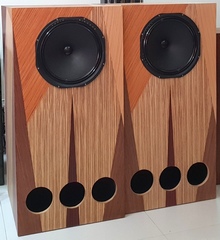 '13.6' (48T x 24W x 24D
inches or 1219 x 610 x 610 mm)
'13.6' (48T x 24W x 24D
inches or 1219 x 610 x 610 mm)
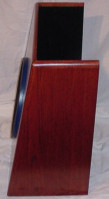 'Open
Baffle' (30T x 24W x 15D inches or 762 x 610 x 381 mm)
'Open
Baffle' (30T x 24W x 15D inches or 762 x 610 x 381 mm)
Which Cabinet Should You Choose?
For those requiring a smaller system, we have four different 'bookshelf' size bass reflex DIY speaker cabinet designs available:
The Micromonitor (.41 cubic feet or 12 liters) was designed primarily as a surround DIY speaker for home theater. It still makes a nice 'extension' speaker for small rooms. It is also an excellent computer speaker. You can supplement it with a subwoofer for more bass output. Many people also choose it as a center channel speaker.
The Minimonitor (.87 cubic feet or 25 liters) is really our smallest stand alone system. It has full bass and dynamics and a satisfying overall balance. It also makes a wonderful center channel or surround speaker.
The Monitor (1.5 cubic feet or 43 liters) is our largest bookshelf system. It gives the bass output of many floor standing systems in a smaller package. As with all the bookshelf systems, they can be placed upright or on their side. This DIY speaker cabinet will accept every speaker size up to, and including, 12 inches. There is also a Monitor MkII version which has a thin front baffle, but is deeper. The difference is mainly in the styling. Both of these can be used on the floor, as the dispersion of all Audio Nirvana high efficiency DIY full range speakers is wide enough that stands are not required.
For those who want a floor standing system, we have the following bass reflex systems available:
The 1.3 (1.3 cubic feet or 37 liters) is our smallest floor standing system. It makes satisfactory bass for those who have space limitations.
The 2.8 tower cabinet (2.8 cubic feet or 80 liters) comes in two versions. The Series I has a wide front baffle, but is shallow in depth. The MkII has a thin front baffle, but is deeper. The difference is mainly in the styling. Both versions are available with two different porting arrangements. The "Big Port" version offers more mid bass at the expense of some low bass output. The "Twin Port" version has 1/3 octave more bass extension, at the expense of some mid bass output.
We also offer two different dual driver designs: the 2.8 Dynamic and the 2.8 Ambience. The Dynamic gives a big, powerful sound while maintaining the same overall tonal balance as the normal 2.8. The Ambience puts a lot more 'weight' in the bass and adds a sense of 'air' to the music. It's our favorite version of the 2.8 if you use 8 inch speakers.
The 2.8-15 is specially designed for our 15 inch speakers. It gives all the sensational sound of our 15's in the smallest possible cabinet.
The 5.6 or 5.6 MkII (5.6 cubic feet or 160 liters) offer more bass and dynamics, in a DIY speaker cabinet that is not too large for most rooms. The 5.6 MkII is narrower and deeper, but will not accept the 15 inch speaker.
The 8.0 (8.0 cubic feet or 227 liters) is for those of you for whom WAF (wife acceptance factor) is important. It looks like the smaller 5.6 from the front, but is 5.75 inches deeper (146 mm). It has more bass and dynamics than the 5.6, but doesn't really look that large.
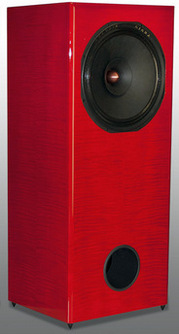
The 13.6 (13.6 cubic feet or 385 liters) is a huge cabinet that maximizes performance of our 15 inch speaker. It can even hold two 15 inch full range speakers. It's the ultimate!
And for those of you looking for something 'different', we offer an open baffle speaker type of cabinet:
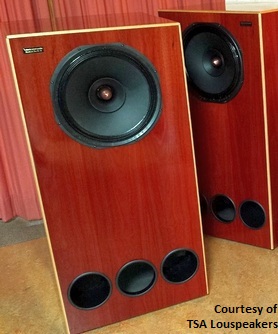
The Open Baffle speaker is basically just a piece of wood supported by two 'wings' to hold it upright. Open baffle speakers don't generate a lot of bass and usually roll off below 63 hz. However, the sound from the back of the open baffle speaker is free to reflect off rear walls and join the sound from the front of the speaker. Open baffle speakers give a 'fat' sound that is very nice for classical music or for people favoring this type of sound. Supplemented with a quality subwoofer, open baffle speakers give an unusual presentation. Open baffle speakers work best with the largest high efficiency full range speakers which can generate more bass without the help of a cabinet. Open baffle speakers are also a way to enjoy our best 15 inch speakers, without requiring a large cabinet. We are experts on open baffle speaker designs and have many years experience. If you go to www.openbaffle.com you will come to this site.
Online Options for Buying Cabinets


Amazon 8 Inch Bass Horn Cabinets ($740)

Or just buy some used cabinets on Craigslist and we'll advise on fitting our speakers!
Need Someone To Make DIY Speaker Cabinets For You?
Recommended Cabinetmakers:
J and F Wood Products (S. California)
McCabe Fabrication 402-781-2569 jmccabe@futuretk.com
Salvage Audio Speaker Cabinets 805-712-3863 salvageaudio@gmail.com
Stewart Speaker Systems 705-733-1033 stewartspeakersystems@gmail.com
We invite other interested dealers to also get involved in building complete systems. We will furnish all plans for free--with no licensing fees--as long as you purchase the full-range speakers from us. We'll also be happy to design new cabinets to your specifications at no charge. And we'll link to your website. Become an OEM speaker company!
Do You Need a Quality Subwoofer Optimized for Music?
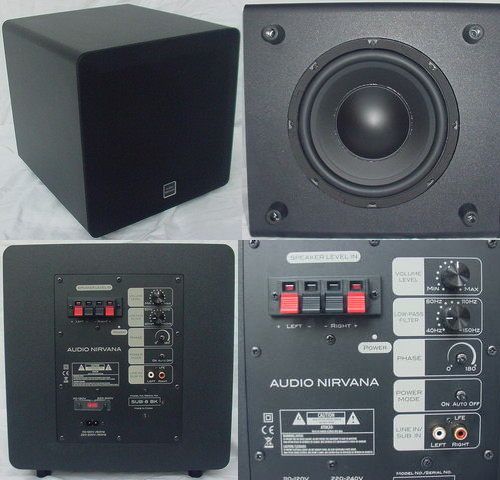
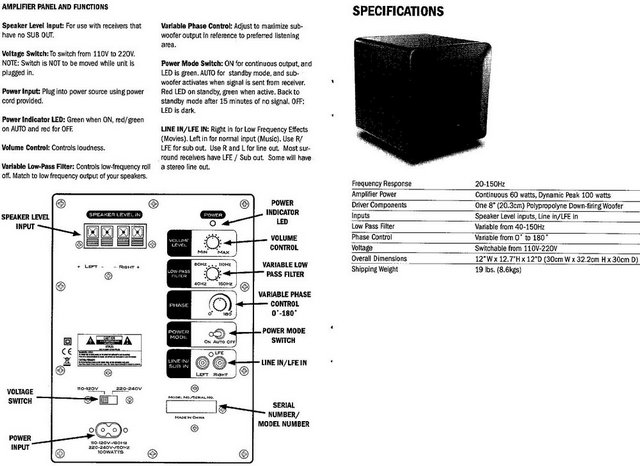
Audio Nirvana MUSIC SUB 8--60 watts RMS (100 watts peak), 20-150 Hz, Down Firing Subwoofer
$499 with free USA shipping
100% MONEY BACK GUARANTEE
If you have a smaller speaker system, or a problem room, you might need to supplement your main speakers with a quality musical subwoofer. We've developed one that works equally well with our speakers for music or for home theater. No, it's not a mega dollar system designed to shake the foundations of your home, but it is designed to provide enough bass to restore balance to your speaker system or to supplement your main speakers in a home theater system. It's optimized for music, not explosions, and that's why we use a quick, fast 8 inch drive unit.
Because of our 55 years experience building full-range and coaxial speakers, and vacuum tube amplifiers.
When you buy from us, you get free, unlimited lifetime technical support, on our speakers, and help with any cabinet design.
We'll do custom design work so you can build cabinets to your own specifications or modify your existing cabinets--free with any purchase.
We'll even design a custom cabinet for you--for free.
What do you get from mail order companies?
We're not just a business. We love music as much as you do. Our goal is to make the best possible sound affordable for everyone.
We honestly feel that the Audio Nirvana and Lowther speakers we sell are the best full-range speakers in the world at any price.
How Do Speakers Work?
Here's an interesting visual representation of how speakers make music:
Shipping is free in the Continental USA. Overseas customers should email us for shipping prices: sales@1speaker.com
The customer is responsible for any return shipping. Item must be returned in original packaging, in 'like new' condition.
All Audio Nirvana full-range speakers and vacuum tube amplifiers are covered by a one year warranty against original manufacturing defects (90 days on tubes).
We're happy to share our 55 years of audio experience with you. Feel free to contact us with any questions you might have on any DIY audio or DIY speaker project.
You can purchase any of our DIY speaker cabinet construction plans for only $25 (they're free with any speaker or amplifier purchase). We will also include a parts list and setup tips. If you later purchase speakers or amplifiers from us, we will refund this $25.
We guarantee your satisfaction. If you are unhappy with your speakers or vacuum tube amplifier--for any reason--you can return them (in new condition) for a full refund.
We can also help you adapt existing speaker cabinets for Audio Nirvana full-range speakers. Let us know how we can help you reach your goal of obtaining the best sound possible at an affordable price.
Contact
David Dicks
CommonSense Audio
34 Wild Horse Way
Chesterfield, Missouri 63005
USA
Email: sales@1speaker.com

Visit Us:


